Posts

Cousins!

  Dear Brothers and Sisters, A couple of years ago, Brother May and I launched a fun project in the ward to find out if we are more than a ward family but have closer relationships with other ward members.   Many of us found out we are cousins with other ward members….. sometimes several times removed.   Do you get confused with “9 th cousin” or “1 st cousin, 4 times removed” or similar relationship descriptions?   We certainly do! FamilySearch has the answer!   When you log onto your FamilySearch account, the home page has a box on the upper left corner with the wording “What’s a 2 nd Cousin Twice Removed?”   Click on the blue bar with the words “Check the Cousin Chart” and the FamilySearch blog post appears.   This blog post has an excellent explanation of those confusing relationships. It defines a cousin and goes on to describe 2 nd , 3 rd and 4 th cousins.   As you read further, the blog describes the term “once removed, twice remove...
Census Records - Occupation and Military Service

  Dear Brothers and Sisters, Today as we bring our discussion of Census Records to a close, we will cover Occupation, including Military Service. It appears that for most areas, the 1870 Census was the first to include Occupations.   Just after the Description section is a column titled “Profession, Occupation or Trade of Each Person Male or Female”.   On the line following the individual’s name is their occupation or profession.   On my great-great grandfather’s Census record from Bedford County, Virginia,   most males were listed as Farm Laborer and the females were listed as “Keeping House”,   Children age 10 and older had a question mark in the column while those under age 10 were left blank.   The 1880 Census carried the same format but the question marks were replaced with the words “At Home”. In 1900 many of the enumerators listed only the occupation of the heads of household and the servants or boarders in the home.   Others may have b...

Census Records Continued ~ Immigration, Education and Home Ownership

  Dear Brothers and Sisters, We apologize for missing last week.   Time got away from us and then Relative Race was on BYU TV.   We really enjoy this show as the contestants are discovering more family.   What an awesome Family History adventure!   If you have not seen it, check it out!   Sunday nights at 6 PM (Comcast lineup) on BYU TV.   This week we are continuing our discussion of the information you can find on Census records.   The last blog posting covered the names of residents and the personal description that was included in the census form.   The description included parentage, birth place, naturalization, and if they spoke English. Today, before we go further, let’s talk more about naturalization. The Census records prior to 1870 did not usually contain any information on place of birth or if the person was a naturalized citizen.   However, the 1870 Census records include the place of birth (if in the US, the enumerator...

Census Records - Names and Descriptions

 Dear Brothers and Sisters, As we strive to serve in our covenant duties to gather Israel and seal families together, we often come across various records that help….. some more than others.  One source of information that we use to gather the families is the Census records.  What can they tell us and how can they help?  Over the next couple of weeks, we would like to help sort out the information found on these valuable documents and will be focusing on the Census records from the United States. In the heading section, almost all census records contain the county and state of the area where the census was enumerated. Most also contain the date of the enumeration and the name and title of the enumerator.  Some also contain the city and other governmental jurisdictions such as ward number or name, precinct number or name, etc.  These are very valuable in determining the location of our family members at a certain period of time.  We may have more than o...

Service in the Cemetery

Image
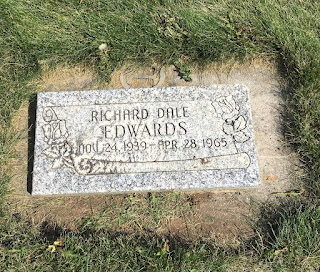
  Dear Brothers and Sisters, Today, Brother May and I had the opportunity to fulfil a photo request for Find A Grave.     We have blogged about this service opportunity before, but we thought we might go into a bit more detail on how we do it. The reason we are bringing it up at this time, is that we were impressed with the thought, that we have the opportunity to do this kind of service in our own family history research.     It is a great service project that the entire family can get involved with.   Even toddlers can help!   In addition, you can just take photos, do some cleaning, or go all out and clean the headstones to spit-shine and then photograph.   It is up to you.   So what is our procedure?   We clean the headstones to the best of our ability before photographing.   Over the years we have collected the items we keep in our “cemetery kit”.   It started with a 5-gallon bucket and two Home Depot tool aprons tied a...

War Time Stories of our Ancestors

Image
  Dear Brothers and Sisters, Many of us are on social media and receive the posts from FamilySearch.   Lately they have been posting quite a few stories of people who served in World War I and World War II.   Along with that, I have been reading novels of people who lived during those turbulent times – from various points of view.   They are all fiction based on facts and cover the stories of the Jews, the Germans, the French, the Japanese and Chinese as well as other ethnic groups.   The FamilySearch posts and the books I have been reading got me to thinking of our ancestors.   Do we know their stories?   Have we recorded them? In an earlier blog post I told the story that I have posted on FamilySearch of my father who was a Pearl Harbor survivor aboard the USS Nevada.   But I am not sure you know the story of Brother May’s parents.   It is truly a war-era love story! The year was 1944.   Brother May’s Dad, Daniel (Danny), was an ...

Our Daily Experiences

  Dear Brothers and Sisters, We have been taught that this life is a journey, a test, and the way for us to use our God-given strengths and talents to become more like our Savior.   We are here on earth to learn, to experience adversity and up-lifting times, and to grow towards our eternal potential.   As we do this, we are writing the story of our mortal life.   Are we recording that story? In a past post, we encouraged you to add stories to your FamilySearch pages.   One of the pages you add to should be your own.   When thinking of what to write, most people think of special news-worthy events, spiritual experiences and funny anecdotes.   We tend to forget the daily activities and struggles.   However, our posterity will be just as interested in those stories as they are in the “note-worthy” ones. Our ancestors may have lived through the pandemic of 1918 or experienced one of more of the World Wars.   Do we have their stories?  ...